🇬🇧 UK Passport Guide · Last verified: March 2026
UK Passport Photo Booth 2026 — Cost, Code and Every Brand Compared
Written by the PixID.studio compliance team · Cross-checked with gov.uk — photos for passports · ICAO Doc 9303
Quick answer
UK passport photo booths cost £6–£12 and take 3–5 minutes. Most modern booths include a 16-character digital photo code for HMPO online applications. Select UK Passport on the screen — not driving licence unless that is what you need. Background must read as light grey or cream (not white). Glasses must be removed — banned since November 2022. Full rules: gov.uk.
How a UK passport photo booth works
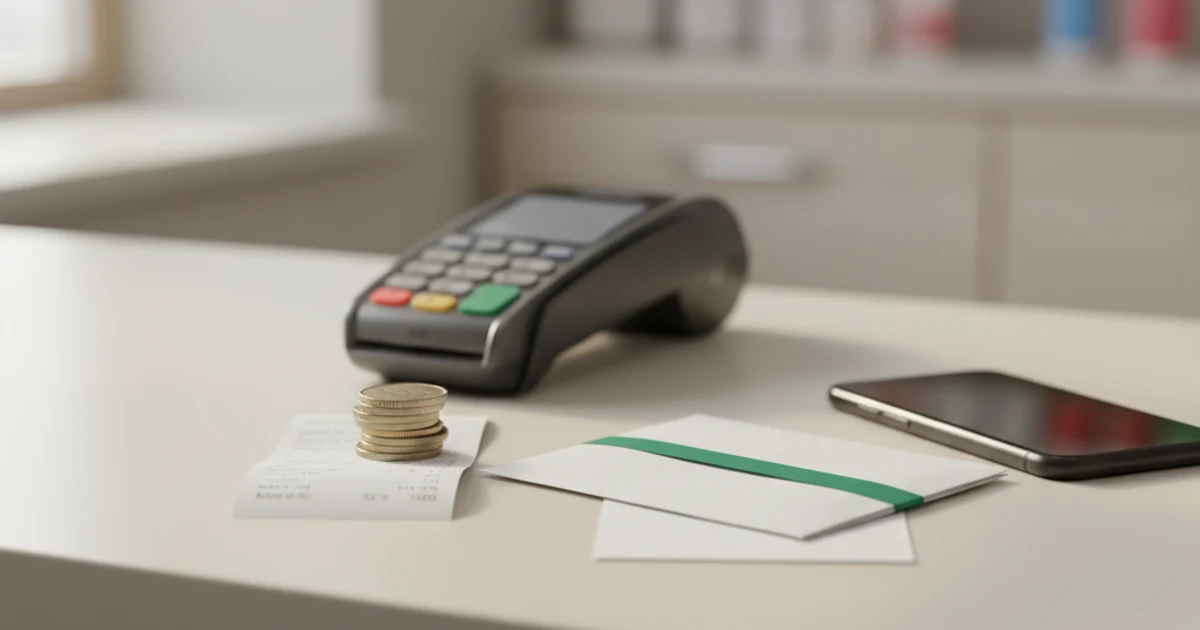
Walk into the booth, close the curtain, and select UK Passport from the menu — not ID photo, not driving licence, not European passport, unless that is genuinely what you need. Sit at the correct height using the adjustable stool. Follow the on-screen positioning guide until the indicators confirm your head is correctly framed. Take several test shots. Select your best frame on the screen. Pay by card or contactless (some older units still accept coins). Collect your printed photos and a receipt with your 16-character digital photo code.
The code is an alphanumeric string (often shown like ABCD-1234-EFGH-5678). Enter it at the photo step of your HMPO application at passport.service.gov.uk and your photo links automatically. No file upload is required when using a code — though you can still upload a JPEG instead if you prefer. See UK passport photo code for troubleshooting.
Total time: approximately 3–5 minutes if the machine is functioning and you do not need multiple retakes.
Every UK passport photo booth brand — full comparison
| Brand | Price | Code | Locations | Staffed |
|---|---|---|---|---|
| Max Spielmann (Tesco/Asda) | £6–£8 | Yes | Large Tesco, Asda, Morrisons | No |
| Post Office kiosk | £8–£10 | Yes | Larger Post Office branches | Sometimes |
| Photo-Me | £10–£12 | Most newer | Rail stations, supermarkets | No |
| Timpson | ~£12.99 | Yes | High street, supermarkets | Yes |
| Snappy Snaps | £13–£16 | Yes | High street | Yes |
| PixID + print | ~£4–£5 total | No code | Online + Tesco Photo | N/A |
Max Spielmann at Tesco or Asda is the cheapest code-capable booth option. Photo-Me wins on footprint — especially at railway stations where supermarket booths are absent. Timpson and Snappy Snaps are not “booths” in the curtain sense but appear in the same decision set because they sell the same HMPO outputs with human assistance. For supermarket-only detail see Tesco passport photo UK; for Photo-Me-only routing see Photo-Me booth UK.
UK passport photo requirements — what the booth checks and what it misses
The booth software checks some requirements automatically, but not all. You remain responsible for every rule in HMPO’s published guidance. Biometric interoperability traces to ICAO Doc 9303, but UK domestic wording on background and recency is stricter than many countries.
| Requirement | Specification |
|---|---|
| Size | 35×45 mm |
| Background | Plain light grey or cream — not white |
| Head height | 29–34 mm chin to crown |
| Expression | Neutral, mouth closed |
| Eyes | Open, clearly visible |
| Glasses | Not permitted since November 2022 |
| Recency | Within 1 month of application submission |
| Editing | No filters, beauty mode, retouching |
The booth does not reliably catch glasses. In certain lighting conditions, automated software misses spectacles entirely. Remove them before entering — do not rely on the booth to flag it.
The booth does not enforce the 1-month rule. It captures and prints; whether the image is still valid when you submit is your responsibility. If you get photos today and apply in five weeks, the photos may already be invalid.
Max Spielmann booths — where to find them
Max Spielmann operates inside large Tesco, Asda, and Morrisons stores. Tesco Extra and large Superstores are the most reliable hosts; Tesco Express and Asda Local typically have no unit. Use maxphoto.co.uk and call ahead for special trips.
Photo-Me booths — where to find them
Photo-Me places booths at railway and underground stations, Post Office branches, larger Sainsbury's and Morrisons stores, shopping centres, retail parks, and some petrol forecourts. Newer booths support HMPO codes; older units may be print-only. Filter for code-capable hardware on photo-me.co.uk.
Code delivery on Photo-Me: after paying, you may enter a mobile number or email on the touchscreen. Your code can arrive by SMS or email as well as on the printed receipt — keep both until your application is submitted.
Post Office passport photo booths
Larger branches host self-service kiosks around £8–£10. The staffed Check and Send pathway (~£16) bundles document checking with photography for paper workflows — see gov.uk — Check and Send and our Post Office passport photo guide. Not every branch has a booth — use the Post Office branch finder with passport filters.
Booth vs staffed service — which is right for you?
| Factor | Booth | Staffed (Timpson, Snappy Snaps) |
|---|---|---|
| Price | £6–£12 | £12–£16 |
| Guidance | None | Yes |
| Free retake | Varies | Usually yes |
| Babies and infants | Not suitable | Much better |
| Hours | Often extended at stations | Shop hours only |
| Code included | Most modern booths | Yes |
Booths win on price and speed. Staffed services win when you need coaching, retakes, or help with children. Compare Timpson passport photo and Snappy Snaps passport photo.
Payment, receipts, and machine faults
Contactless card is standard on newer hardware, but carry a backup payment method if you are visiting an older high-footfall station unit. If the printer jams after charging you, photograph the on-screen error code and retain any transaction IDs — you will need them when contacting operator support. For HMPO, what matters is ultimately whether you leave with usable prints and a working code; a failed session costs time, not just money.
Photo code — validity and troubleshooting
Code validity is often up to 90 days from capture — confirm on your receipt. Still plan around HMPO’s one-month photo age rule: an “unexpired” code does not override stale imagery if the examiner judges the photo too old for the submission date.
If your code does not work: check for 0/O and 1/I confusion; try hyphen variants; verify expiry; contact the booth operator; if blocked, capture fresh photos rather than submitting a broken code.
Common mistakes that get booth photos rejected
- Glasses left on — software may miss them.
- Slight smile — neutral face only.
- Wrong photo type selected — must be UK Passport preset.
- Head tilt — look straight ahead.
- Too close to backdrop — shadows on grey.
- Photo older than one month at submission.
- Print-only booth when you needed a code — check finder filters.
Babies and young children — why booths do not work
Fixed stools and automation cannot safely frame an infant without prohibited hands in shot. Use Timpson, Snappy Snaps, or the flat-lay method, then validate digitally. Full baby workflow: UK baby passport photo.
When to skip the booth entirely
Online applicants who only need a JPEG should consider home capture plus PixID export — $4.99, direct upload, no travel. For prints, add a Tesco Photo 6×4 from the downloadable sheet (~£0.15). Combined digital + print often lands near £4–£5.
How to take your own photo instead of using a booth
- Plain light grey wall or sheet — not white.
- Window light facing you; disable portrait/beauty modes.
- Rear camera at eye level, held by someone else.
- Neutral expression; remove glasses.
- Capture many frames; upload to PixID UK Passport preset.
- Download JPEG plus 4×6 sheet; print only if needed.
More detail: UK passport photo at home.
Reading the booth menu — UK Passport vs other presets
Touchscreens often list UK Passport, UK Driving Licence, ID, and sometimes regional or legacy labels. Each preset applies a different crop mask and validation threshold. Picking “ID” because it “looks similar” is a common way to waste £10: the exported strip may fail HMPO’s head-height measurement even if the picture looks acceptable on the preview.
If you are renewing online and plan to use a code, the booth must complete the HMPO-linked capture path for UK passports — not a generic print-only ID mode. When in doubt, cancel the session and restart on the correct tile rather than hoping an examiner will leniently interpret the wrong template.
Station lighting, winter skin tone, and harsh shadows
Railway and shopping-centre booths sit under mixed lighting: overhead fluorescents plus reflections from glass doors. That can carve shadows under the brow or nose that automated checks miss but human reviewers flag. If the preview looks contrasty, adjust posture slightly backward (within the guide), face the recommended neutral angle, and prefer a retake over “it will probably be fine.”
Applicants with very fair or very deep skin tones should watch for background separation: HMPO needs a clear edge between hair and grey. Busy patterns in hairlines or heavy edge halos from cheap LEDs can resemble digital manipulation — another reason to favour even daylight-style illumination when you can choose between locations.
After HMPO receives your code — what still can go wrong?
Submitting a code does not suspend the one-month recency rule. It also does not guarantee that a later manual review agrees with the booth’s auto-crop. Examiners may still reject on expression, visibility of facial features, or background uniformity. Treat the booth as a convenience layer, not a legal shield — keep your receipt until the passport is issued.
If you need to switch from code to upload mid-application because of a portal error, capture a fresh compliant JPEG rather than photographing your printed strip. Phone photos of prints introduce moiré, uneven grey, and compression artefacts that fail digital submission tests.
Using booth prints on paper applications
Paper forms need two identical 35×45 mm images. Booths normally print a strip — verify both frames match before you leave. For child applications, countersigning rules on gov.uk may require writing on the back of one photo; do not crease the face area when flipping the print.
If you later decide to apply online instead, do not assume the physical strip can be scanned — generate a proper digital file or use a fresh booth code session.
Security, privacy, and crowded stations
Busy concourses mean queues outside the curtain. Wait until the previous user fully exits — partly for privacy, partly so sensors reset. Keep your code receipt private; it is effectively a key to associate your likeness with an application step. If you discard it in a station bin, treat the code as compromised and request a new capture if you have any concern.
Wheelchair users, mobility aids, and booth ergonomics
Not every booth has a level threshold or enough turning space for a powered chair. If stepping up is difficult, phone the venue or operator ahead — some shopping-centre sites place newer, larger cabins near accessible routes while legacy stations still use cramped boxes. Staffed Timpson studios are sometimes easier than retrofit station cabins because a human can adjust camera height and distance without you fighting a stool.
If you must use a booth, bring someone who can confirm your head sits inside the on-screen oval. The software cannot interpret “close enough” the way a human can; a few centimetres of vertical offset can push the chin-to-crown measurement outside HMPO’s 29–34 mm window even when the preview looks centred to the naked eye.
Comparing total trip cost — booth price vs time cost
A £7 booth session is not “cheap” if it costs £15 in parking and an hour of annual leave. Before you default to the nearest machine, map true total cost: travel, congestion charges in central London, childcare coverage, and the risk of a second trip if hardware is down. For many online applicants, £4–£5 all-in with PixID plus a single Tesco Photo pickup beats two booth attempts spread across different Saturdays.
Keep the one-month window synchronized with your calendar: applicants who batch errands sometimes capture photos too early, then wait for a birth certificate or name deed poll update — by the time they submit, the portrait is stale. Booths will still sell you a fresh strip; they will not warn you that your application timeline invalidated the previous one.
Finally, remember that HMPO updates guidance periodically. A booth preset from last year is not a substitute for reading the current gov.uk photos page the week you apply — especially if you are switching between online and paper mid-process. When in doubt, take fresh photos rather than stretching an old strip across a delayed submission.
Official sources
gov.uk — photos for passports · Apply for or renew a passport · ICAO Doc 9303. For contrast with US white-background rules (a common confusion source), see US Department of State passport photos. If you also need a US visa soon, do not reuse the UK grey-background file without checking the separate State Department crop.
HMPO-ready digital passport photo — upload from home
Get My Photo — $4.99